

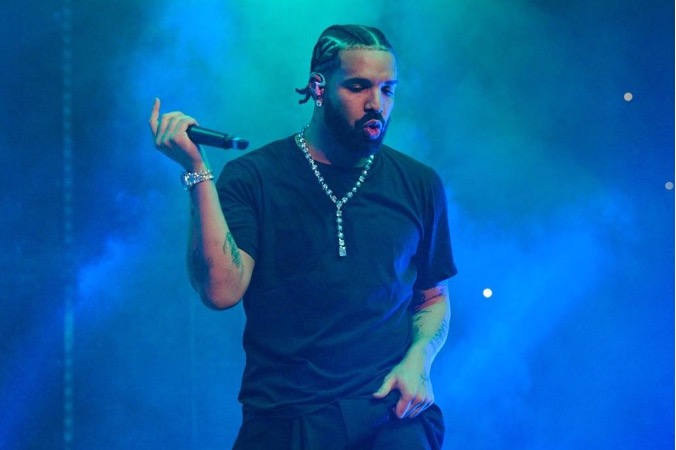
All Drake needed was “a One Dance,” but recent litigation alleges it’s the record industry that’s been two-stepping with payola all along. Last year, Drake’s team filed petitions in Texas and New York alleging that Universal Music Group and iHeartMedia engaged in “deliberate, irregular, and inappropriate business practices – including covert and illegal pay-to-play (‘payola’) deals – to create a record-shattering spread of Not Like Us” by Kendrick Lamar. Commentators called it one of the most commercially successful diss tracks ever, earning Song of the Year honors.
However, Drake’s petition alleged that this success was manufactured. He claimed that radio spins were generated by UMG “funnel[ing] payments to iHeartMedia (and its radio stations) as part of a pay-to-play scheme,” with payments concealed so listeners would be unaware of promotional compensation, in violation of the Communications Act’s prohibitions on undisclosed payola.
Related claims alleged that UMG employed non-radio tactics to amplify the five-time GRAMMY song-winner, including reduced Spotify licensing rates in exchange for algorithmic placement, recommendation to users searching for unrelated artists, paid influencer promotion, bot-driven stream inflation, and Apple Siri misdirection when users requested Drake’s Certified Lover Boy. Together, this “scheme” allegedly “deceive[d] consumers into believing the song was more popular than it was in reality.”
Though Drake and iHeartMedia settled the payola claim and the remaining UMG claims were dismissed, the dispute raises broader questions regarding how existing regulatory frameworks address undisclosed promotion in the streaming era. The accusations illuminate expanding avenues for consumer deception by major industry players as music consumption outpaces outdated regulations.
It’s well known that not every song stuck in our heads reflects organic listening behavior. Record label politics and deep pockets play a significant role in hearing the same ten songs on the radio, often leading emerging artists to be dismissed as “industry plants.”
“Payola,” first coined by Variety in 1938, refers to manufactured hits created through undisclosed payments for radio play. In 1960, President Eisenhower condemned payola as undermining public trust, but amendments to the Federal Communications Act banned only covert bribes, allowing the practice to persist through disguised “listening fees.” The legally distinct practice of “pay-for-play” (contra “payola”) permitted compensated airplay so long as it was disclosed (see “brought to you by” or “presented by” X label).
Pay-for-play, however, isn’t where modern payola ends. Labels continue to funnel money to independent promoters, who in turn offer “promotional payments” to stations, with “consideration” extending beyond cash, encompassing discounted or unpaid performances exchanged for airplay. Last year, the FCC barred undisclosed free or reduced-cost performances tied to airplay and demanded that iHeartMedia respond to allegations that it pressured artists to trade compensation for favorable spins.
This persistence suggests a broader structural failure. Disclosure gaps in music promotion are now a competition law problem: undisclosed algorithmic boosts function as entry barriers that entrench incumbents in the attention economy. Payola, in essence, is antitrust for attention.
The problem is not that payola has seen an encore– it never left, and legal frameworks have yet to catch up. The law draws arbitrary lines between when promotion must be disclosed and when it may remain hidden. While radio requires disclosure before play, streaming platforms governed primarily by the FTC impose requirements only for active endorsements, leaving most music placements, including paid TikTok uses, undisclosed. It’s no longer a pure bribery issue. Identical promotional incentives are treated differently across media, disadvantaging independent artists and deceiving consumers as algorithmic recommendation becomes the new gatekeeper.
Modern payola fits comfortably within the streaming-era. Spotify’s “Discovery Mode,” which allows artists to accept reduced royalty rates for algorithmic prominence, operates as a pay-for-play analogue. This reinforces deep-pocket label power by enabling gaming of opaque recommendation systems. Spotify’s black-box algorithms obscure ranking criteria, preventing indie artists from verifying fairness and pressuring them to opt in to remain competitive while enabling well-resourced labels to reverse-engineer algorithmic preferences. This reveals both a disclosure problem and a market issue, where algorithmic access functions as barriers to entry. The issue no longer remains deception and disclosure, but dominance and foreclosure.
This system harms artists by shifting financial risk onto creators, who subsidize promotion from their own royalties. This forces musicians to choose between standard compensation or favorable airplay, while independent artists are boxed out by informational asymmetries, reinforcing Top-40 homogeneity and listener fatigue.
The same obscurity extends to editorial playlisting, now functioning as the digital counterpart to radio programming. As with paid radio ads, placement on major playlists like “New Music Friday” or “Rap Caviar” can determine whether a song breaks through or disappears. Playlist inclusion can be negotiated through undisclosed promotional partnerships or informal label-platform relationships, leaving artists and listeners alike unaware of the financial considerations shaping exposure. These playlist dynamics blur curation and promotion, turning “recommendations” into undisclosed advertisements.
More broadly, this practice undercuts the emphasis on disclosure which pay-for-play weaponized as a loophole. It introduces non-transparent promotional bias into what listeners perceive as neutral algorithmic recommendations. Listeners assume recommended songs reflect popularity or relevance, not a lucrative tradeoff. This black-box structure affects listeners, obscuring whether songs reach them through preference or paid placement. The purpose of traditional payola law, which requires disclosure when “consideration is directly or indirectly paid,” is to protect the public from hidden influence and ensure transparency in programming decisions. This mirrors Eisenhower’s public-trust concerns, underscoring payola’s modern persistence. Though Discovery Mode involves no cash bribe, it might as well. The guise of “algorithmic personalization” allows modern music industry giants to camouflage the same conflict of interest at the heart of payola. If traditional radio must disclose pay for play platforms, streaming services should too. All listeners have the same right to know when financial arrangements are shaping what they hear.
Though these practices sing the same song of traditional payola issues, current regulatory gaps are what make critics across the decades sound like a broken record. Since Spotify is not a broadcast licensee regulated by the FCC, the Communication Act’s disclosure requirements do not technically apply, leaving a policy vacuum for algorithmic influence. Without FCC jurisdiction, these practices fall into a gray area, being neither broadcast nor “advertising” under the FTC, whose disclosure rules were built for traditional product promotion, not algorithmic ranking. Because the Act governs only terrestrial radio, undisclosed streaming payola may remain lawful.
The law’s indecision on whether music promotion is advertising or speech creates an ambiguity that platforms and labels exploit through contractual and data-driven incentives, ultimately privileging major acts. Streaming, influencer, and algorithmic promotion all escape the old doctrinal framework. Modern payola is often framed as contractual—royalty discounts or playlisting—and thus doctrinally evasive. No longer solely a DJ liability issue, legal bodies struggle to pin responsibility in contemporary contexts as liability may be diffused through not just record promoters, but platforms, labels, and influencers.
It’s common for TikTok influencers to be contacted by modern day record promoters, or even label representatives themselves, to promote one of their artist’s new songs. Given TikTok’s central role in music discovery, having influencers use your songs seems an effective means of dissemination and virality. However, you rarely see disclosures made by TikTok users when this is the case. The FTC distinguishes active endorsements from “mere showing,” classifying compensated background music use as disclosure-exempt. Creators report informal, undisclosed payments from labels, illustrating the ecosystem’s opacity.
Modern payola is not an issue of DJ corruption, but of consumer deception. If listeners can’t tell what’s organic versus what’s paid for, they’re being misled in the same way as if advertisements weren’t labelled. Consider paid song placement on TikTok: though framed as contracts between sophisticated parties, the agreement’s true stakeholder—the unknowing public—goes ignored. The same dynamic operates in streaming fraud, as seen in Drake’s petition, where fake streams and bot-generated plays inflate popularity metrics that listeners mistake for genuine demand. These artificial boosts replicate past DJ bribes, buying prominence through data rather than dollars and tricking platforms into amplifying false demand. Because playlisting and recommendation systems reward engagement, these falsified plays enter a feedback loop that entrenches major-label dominance while eroding consumer trust. Like traditional payola, this quietly advantages major labels as technology outpaces regulation.
Should we harmonize disclosure regimes so that song placements in TikTok and Instagram videos are treated like sponsored airplay on radio? Perhaps platforms should bake disclosures into their user experience– platform-level disclosure tools, such as Instagram’s “Paid Partnership” badge, mandatory for playlist placements, a “Promoted Track” badge on Discovery Mode songs, or an automatic caption overlay in TikTok videos where music use is paid.
Whatever the solution, something must be done to catch up to payola. In the attention economy, disclosure is not merely about honesty, but access. What once involved envelopes slipped to DJs has evolved into institutionalized systems where exposure and data function as currency. While the medium has changed, the core tension between editorial independence and economic incentive remains very much alive. Before regulators step in, platforms should face the music and make a change.